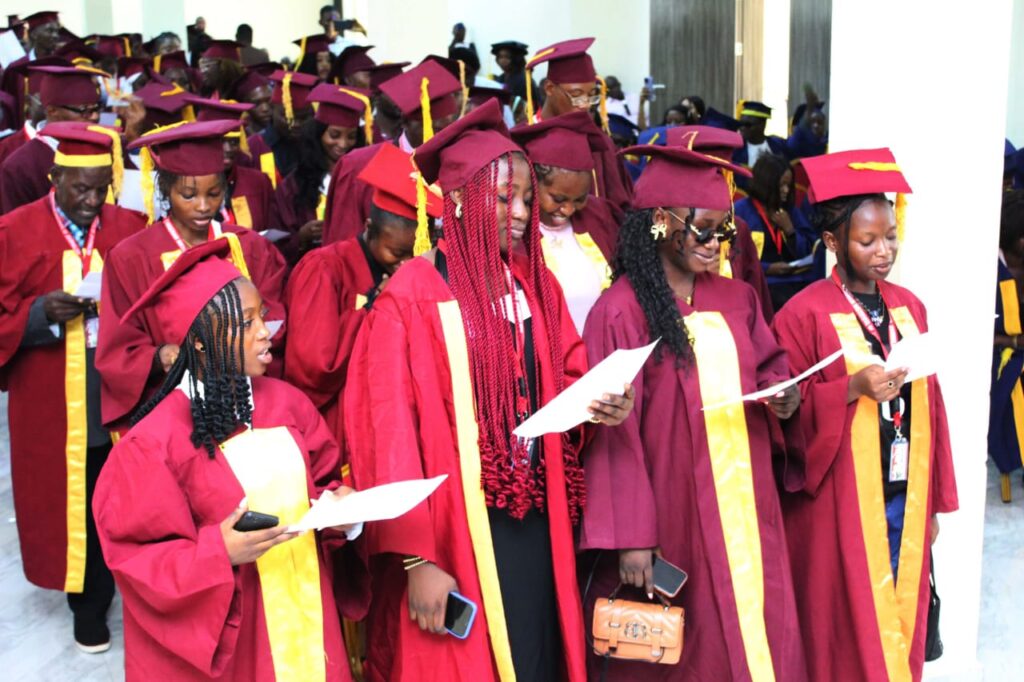
The Nigerian Institute of Journalism (NIJ) on Wednesday formally welcomed 293 new students into its fold, urging them to embrace ethical journalism, adapt to technological changes, and prepare to shape Nigeria’s media landscape.
Delivering the matriculation speech at the Sir Kesington Adebutu Media Resource Centre, Ikeja, Provost of NIJ, Mr. Gbenga Adefaye, said the ceremony marked more than a formality, describing it as a solemn academic covenant binding students to discipline, integrity, and academic excellence.
“This is your induction into the intellectual life, traditions, and ethical culture of the Institute,” Adefaye said, adding that signing the matriculation register affirmed their commitment to the responsibilities and privileges of the NIJ community.
The Provost noted that journalism in Nigeria is undergoing profound transformation, driven by digital technology, artificial intelligence, data-driven storytelling, and an increasingly complex information ecosystem. He told the students that mastering multimedia production, digital investigations, podcasting, and strategic content management would be essential.
“For over five decades, NIJ has combined rigorous academic instruction with hands-on professional training,” he said. “This dual approach is the bedrock of our reputation, and your education here will prepare you not just to adapt to change, but to lead it with competence, courage, and conscience.”
Adefaye also emphasized the Institute’s commitment to professionalism, warning that NIJ is not a “certificate factory.” Students were reminded that attendance, continuous assessment, proper conduct, and professional decorum would be strictly enforced.
This year, 293 students were matriculated, comprising 138 National Diploma (ND) students, 69 Higher National Diploma (HND) students, and 86 Postgraduate Diploma (PGD) students. The Provost highlighted that HND students who complete their programme would be eligible for NYSC mobilization, placing NIJ graduates on equal professional footing with their peers nationwide.
He also listed professional development opportunities available to students, including field trips to media organizations, participation in national competitions, intensive newsroom practice in print, broadcast, and digital media, and student industrial work experience. “Many media companies today directly ask for our best interns for employment,” he added.
The Provost reassured students of the Institute’s stability, noting that NIJ has maintained an uninterrupted academic calendar with no strikes or avoidable delays. He also called for care of the Institute’s recently upgraded ICT facilities, describing them as shared institutional assets.
Highlighting the challenges of modern media, Adefaye warned students that the rise of artificial intelligence, deepfakes, and misinformation has heightened the responsibility of professional communicators. “Fake news is no longer a nuisance; it is a threat to public trust and democratic stability,” he said.
He also informed the students that NIJ had successfully completed its accreditation with the National Board for Technical Education (NBTE) in December 2024, achieving full institutional accreditation valid until 2030, full accreditation for the ND programme, and provisional accreditation for newly disaggregated HND programmes in Journalism, Media Studies, and Strategic Communication.
“As you leave this ceremony, remember: you are here to become leaders, innovators, and ethical custodians of public information,” Adefaye concluded. “Nigeria needs journalists who are courageous, competent, and principled. NIJ will equip you with the skills and professional identity that will define your career long after graduation.”
